There is a Difference featuring Charlie Robinson, CSMO TimberHP
January 20, 2026
.
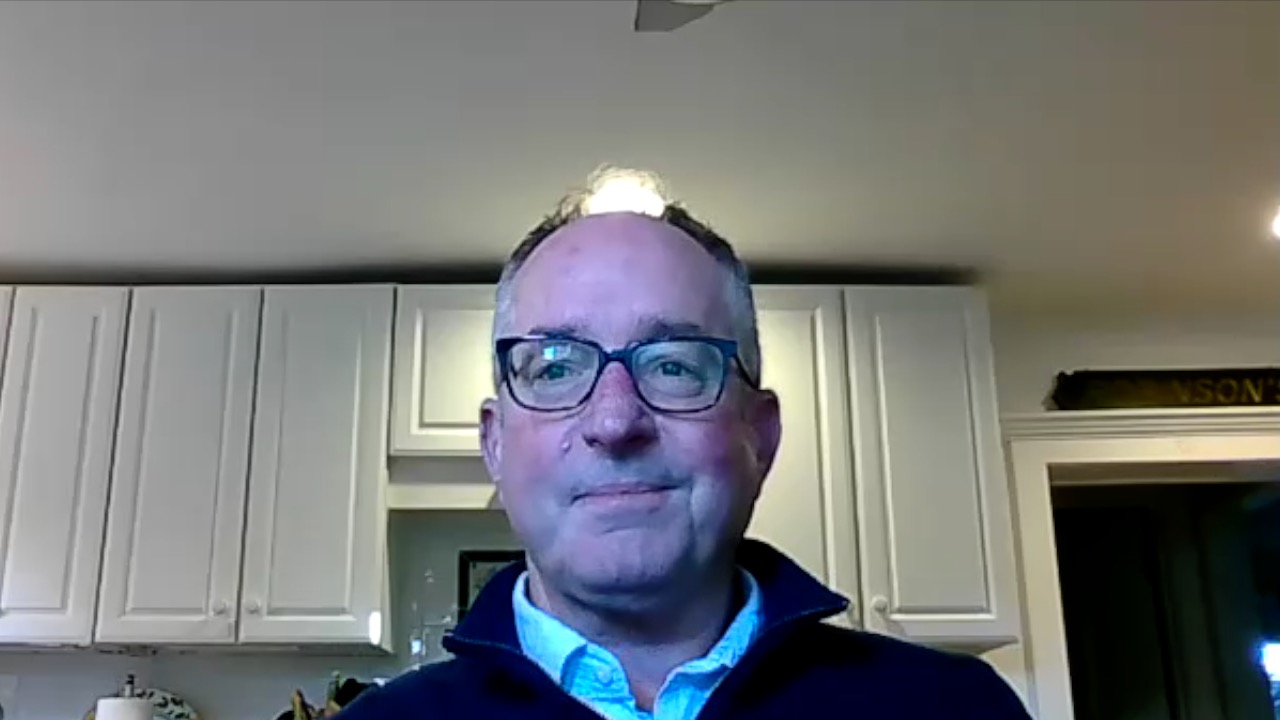
Meet Charlie Robinson. He is the sales and marketing leader of TimberHP. It has been our privilege to know Charlie for several years as he leads the latest effort to bring a truly innovative and industry changing product to market. First, Huber Zip System and now TimberHP. Charlie’s experience in bringing innovation to market is by itself a remarkable conversation to hear and learn from. Now add thoughtfulness, consideration, and humility to the conversation and we have a special conversation with a terrific person to share with you. It is our pleasure to introduce you to Charlie Robinson.
I’m Charlie Robinson. I’m the chief sales and marketing officer for TimberHP, which is North America’s first manufacturer of wood fiber insulation. I would describe my business career in three chapters. Chapter one was I helped to co-found a national sailing school. I think this reflects just my love of the outdoors, the environment, being one with nature, as many people like to say. Also, I happen to be a pretty good sailor.
The second chapter was I realized that I didn’t have the business acumen to really take that sailing school and scale it and make it as big and profitable as I wanted, so I went to business school and pivoted into marketing, marketing for consumer packaged goods companies, like The Coca-Cola Company. And in that time period, I learned how critical discipline is, consumer focus, understanding the end user, using data to make good decisions, and not just going with your gut and your instinct.
And then chapter three, which is really what has led me into the building material industry, is I just fell in love with builders. They’re just really cool people. They’re all a bunch of MacGyvers. There is no obvious game plan, and even the best architect in the world will present challenges to a builder who has to solve for all of those design requests. And so, I’ve spent the last 20-plus years in the building material industry, and have always loved helping businesses bring something new and innovative to the marketplace that would change the way builders build.
How do you define innovation?
I see innovation as changing the way things are done that creates value, and the value can be either for your team, for your company, for an organization, and the value can be both a service or a product, or an experience. I mean, it could be anything. I think the best example of something that I’ve been intimately involved with that has changed the way people do things for the better is helping to lead the launch of ZIP System sheathing and tape. I got really lucky. I landed at Huber just when they were getting ready to launch it. It was the beginning of the Great Recession, so every challenge you can imagine that might limit the success of our launch happened. And so fortunately, the Huber family, the Huber leadership team, and the board were very committed to bringing this to market, and so despite all of the problems, trials, and tribulations, we stayed the course and we made it successful.
What is an example of a recent innovation in building products?
TimberHP. At TimberHP we sell three different product formats, the loose fill, we sell the batt, which would go in a wall cavity, as does a loose fill. And very recently we just launched the TimberBoard product, which is a rigid board that goes on the exterior of the building enclosure to help minimize thermal bridging. The birth of rigid board insulation has been around for decades, but the advance of energy codes has made it become front and center. Everyone is starting to glom on and use this, both in single family, light commercial, like a multi-family building, or even commercial buildings. And specifically, my role has not been in inventing the product. I’m very much involved, and my team’s involved, in helping to bring back end user feedback on how the product is performing, because we can change the formulation. You can use different wood fiber ingredients, different species of trees, et cetera, to help improve its workability and usability.
What I’ve been doing is building on a commercial team of sales and marketing people to bring it to market. And when we bring it to market, we think of, what are the real drivers of adoption? And the obvious one is education and awareness, so we want to find the most cost-effective way to help educate the builder community so that they know that we are available, and our product is a high-performing product. And of course, it’s a superpower, is that we are sustainable, recyclable, and we are carbon negative, which no insulation product in North America can say.
Tell me a little bit more about the TimberBoard product itself. How is it produced? Does it meet the required fire code? Tell me a little bit more about the genesis of this innovation.
TimberBoard starts with the same wood fiber feedstock as our fill and batts, but it quickly becomes its own product. We run it on a dedicated line with a tighter refiner, which creates a finer fiber that can be pressed into a rigid board at higher densities. That fiber is blended with a small amount of industry-standard binder and a wax additive, formed into a mat, and then cured under heat, pressure, and steam to create a stable, structural board.
From a fire and code standpoint, TimberBoard doesn’t rely on borates. Its performance comes from density and the way compressed wood fiber naturally chars. What we’re selling today meets ASTM E84 Class B and is code-approved for Type VB construction, which represents the vast majority of residential and light commercial buildings. From a builder’s perspective, that means it’s usable today on the kinds of projects they’re already building. If you put a torch on it, it chars in place and slows flame spread rather than propagating it.
Where TimberBoard really differentiates is moisture management. It’s extremely vapor open—more than any other rigid continuous insulation—and it handles water exceptionally well. It can take on incidental moisture during construction and then dry back out instead of trapping it in the wall. It’s also dense, so you get exceptional sound attenuation, with an R-value per inch comparable to other rigid insulation options. The innovation really came from studying European wood-fiber systems and adapting that performance to a North American market in a way that’s simpler to build with, more energy-efficient to manufacture, and better aligned with how buildings actually need to perform over time.
Does innovation present any barriers in your work, and how do you overcome them if they do?
I would say that all innovation that is truly solving a problem, an unmet need, in my experience, always presents problems. If it was easy to do, Shawn, then everybody would do it and the world would just be perhaps an easier, saturated place with millions of innovative products. They’re all difficult, and that very challenge is what makes something innovative, because then you finally have changed the way people do things.
I find in developing innovation, there’s sort of three paths that great companies do very well. Number one is, there’s somebody in that company, let’s describe it as our co-founder and CEO, Matt O’Malia, who has a vision. He had a vision, as did others. He is an architect, and he realized that in the United States, there really wasn’t a solution for insulation that is sustainable and carbon negative. And so, he studied in Germany and learned that the European manufacturers were already making wood fiber, and he brought that technology to the US, found investors, and began on this vision of providing the only solution in North America. So number one is having a visionary leader.
Number two is being very consumer focused. I would say that’s been a big hallmark of my career. I learned that in my consumer packaged goods experience. Consumer packaged goods companies are really smart about investing heavily in understanding, what segment are you really trying to go after? What are their unique needs? And how can you develop a product off of a technology that uniquely satisfies that?
And then the last piece is the obvious one, which is, all innovation is collaborative, so you need a really talented cross-functional team. You need subject matter experts from all the disciplines, otherwise your effort is going to be highly limited, much slower, lumpy, likely a lot more expensive. And most new products sadly fail, so having a lot of talented cross-functional team members to help you get over the humps is mission critical.
What do you see for the future of building products in the construction industry?
I think what I’m seeing most, and when I think of TimberHP, is there truly is a desire to have more sustainable, recyclable products, and it benefits not only in that it helps make for a healthier planet and healthier homes, but in the supply chain, the supply chain was greatly disrupted during COVID, and now today continues to be disrupted by the tariffs. And so, people in the building industry are, I think, suffering from PTSD where, what’s the next disruption in my supply chain? And it really makes it hard to have a successful business. So, when you have a local source, wood baskets, such as in Maine, where 90% of the state is forests and they’re very well managed, and then you can harvest that as a residual wood chip that would be waste anyway. And so, you’re getting it at a very affordable price, and then have a continuous supply of that raw material to make a product that performs very well, then you have magic. So, that is part one in this process.
Do you have any advice for the people that are watching and reading this conversation?
I would say find your passion. Find what inspires you. That’s what makes life worth living. And for some folks, that’s being a scholar or a teacher, a doctor or lawyer, a first responder. Fortunately, you get old enough and you meet all these people and you learn to respect and appreciate them. For me and my team at TimberHP, it’s been bringing an innovative product to North America, and that’s what just keeps us motivated, inspired, and we’re going to keep at this thing until we’re successful.
Thank you, Charlie.