Landscaping and Outdoor Living Trends for 2026: What to Build, What to Sell, and What to Stop Ignoring
January 23, 2026
.
Landscaping and Outdoor Living Trends for 2026
Outdoor living isn’t a “nice-to-have” anymore. It’s a square-footage strategy.
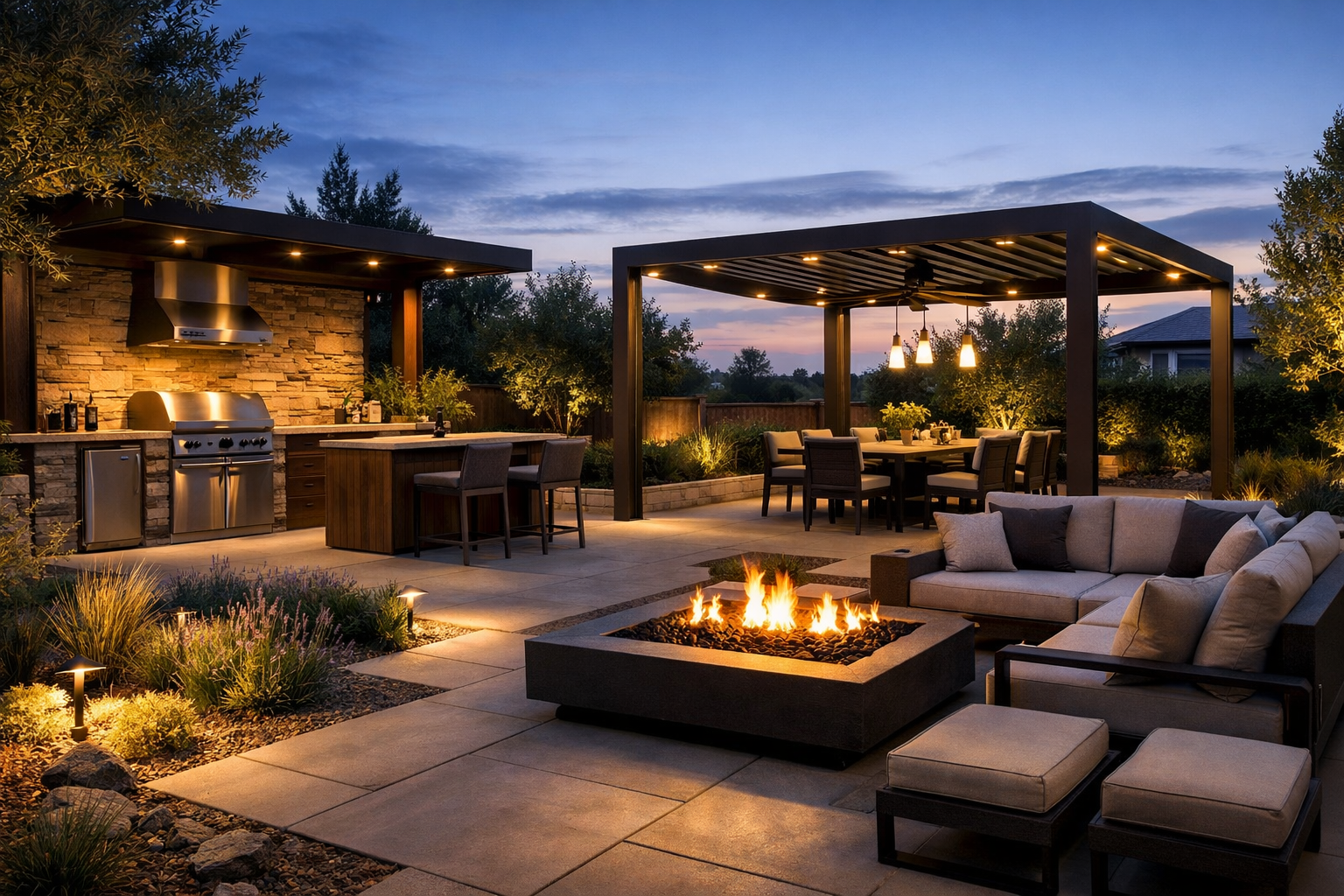
Homeowners have gotten comfortable treating the backyard like a second (or third) living room, and the market has followed. The next wave in 2026 is less about buying a grill and more about designing an outdoor environment that feels intentional: shaded, lit, climate-managed, low-maintenance, and worth using on a random Tuesday night.
If you’re a product manufacturer, here’s what this really means: the purchase decision is moving upstream. People aren’t shopping individual products. They’re shopping outcomes, then assembling a system. Your job is to make your product the obvious “system component,” not a lonely SKU in aisle 12.
Let’s break down the trends that will shape landscaping and outdoor living in 2026, what’s driving them, and how manufacturers can win.
The macro forces pushing outdoor living forward
1) The yard is now a functional room, not leftover space.
Houzz’s outdoor research consistently shows homeowners renovating outdoors to improve aesthetics, expand entertainment space, and extend the home’s living area. That direction is continuing, and it’s changing what people buy and how they justify it. Houzz+1
2) “Built-ins” are beating “bring-outs.”
NAHB points to outdoor spaces featuring more built-in elements: fire pits/fireplaces, outdoor kitchens, pergolas/gazebos, and more, often packed into tighter footprints with better planning. National Association of Home Builders
3) Shade structures and outdoor kitchens are a growth engine, not a niche.
Hardware and building-channel coverage is already calling out pergolas, pavilions, and outdoor kitchens as major drivers in the category heading into 2026. HBS Dealer
Those are the market conditions. Now here are the specific 2026 trends that will show up in products, plans, and purchase orders.
1) Zoned outdoor rooms (designed like interiors)
In 2026, “a patio” sounds like “a room with one lamp.” People want zones: cooking, dining, lounging, solo quiet time, kid chaos containment, and sometimes a work nook that feels less depressing than a laptop on a pool chair.
Houzz’s Outdoor Trends coverage highlights the popularity of key outdoor features (including outdoor kitchens and living zones) and the broader move toward thoughtful outdoor upgrades. Houzz+1
Manufacturer implication: stop marketing single products in isolation. Show layouts. Show combinations. Sell the “scene,” then make the component list easy.
2) Outdoor kitchens evolve from “grill station” to “hospitality line”
Outdoor kitchens aren’t just bigger. They’re smarter:
-
More refrigeration and storage (because running inside kills the vibe)
-
More durable finishes (sun, grease, and weather do not care about your design intent)
-
More beverage-centric features (ice, sinks, taps, warming drawers)
Outdoor kitchens remain a headline item in Houzz’s outdoor renovation trend reporting. Houzz+1
Manufacturer implication: If you sell appliances, cabinetry, surfaces, or fasteners, your differentiator in 2026 is weather performance + cleaning reality + install simplicity. Make it spec-friendly for pros and reassuring for homeowners.
3) Shade gets “architectural” (and more automated)
Pergolas, pavilions, and covered structures are no longer decorative. They’re the ceiling of the outdoor room, and ceilings determine whether people use the space.
Expect more:
-
Louvered roof systems
-
Integrated lighting and fans
-
Motorized privacy screens
-
Clean-lined structures that match the home’s architecture
This is showing up broadly in category coverage and trend discussions as a major growth segment. HBS Dealer+1
Manufacturer implication: Shade is a platform. If you make lighting, fans, heaters, screens, speakers, or mounting systems, partner up and co-market. One brand can’t credibly claim to “complete the room” alone.
4) Climate management: heat, cool, extend the season
The 2026 goal: make outdoor living comfortable in more months, not just in perfect weather. That means:
-
Infrared heaters
-
Fire features as functional warmth (not just ambiance)
-
Shade + airflow strategies
-
Materials that don’t become unusable when the sun hits them
Fire pits/fireplaces and outdoor kitchens have ranked high in NAHB’s reporting on popular outdoor living features, reinforcing the all-season comfort push. National Association of Home Builders+1
Manufacturer implication: this is where warranties, performance specs, and honest installation guidance matter. If your product fails in heat, fades fast, rusts, or warps, your brand becomes a cautionary tale told over burgers.
5) Water-smart landscaping becomes the default
Water restrictions, drought cycles, storm events, and rising insurance pressure are forcing homeowners to rethink landscaping as resource management, not decoration.
Expect growth in:
-
Drip irrigation and smart controllers
-
Rain capture (even small-scale)
-
Permeable hardscapes and better drainage planning
-
Plants chosen for resilience, not just looks
ASLA’s ongoing climate and biodiversity emphasis in the profession signals where design priorities are heading. ASLA
Manufacturer implication: if you sell irrigation, pavers, soil, drainage products, or hardscape systems, shift your messaging from “nice yard” to “less waste, fewer problems, more control.”
6) Native and pollinator-forward planting becomes mainstream
The new status symbol isn’t exotic landscaping. It’s a yard that looks good and makes ecological sense.
Native plantings, pollinator gardens, and habitat-friendly landscapes are moving from “gardener hobby” to “homeowner priority,” especially as clients hear more about biodiversity and resilience from professionals and media. ASLA
Manufacturer implication: If you make soil amendments, edging, landscape lighting, or garden products, build educational content that helps homeowners do it right. This space rewards brands that teach, not just sell.
7) “Low-maintenance” becomes a luxury feature
Time is expensive. Maintenance is annoying. The 2026 buyer wants an outdoor space that looks designed but doesn’t require a weekend job schedule.
This boosts demand for:
-
Composite decking and low-upkeep cladding
-
Stain-resistant, outdoor-rated fabrics
-
Hardscape-forward designs that reduce fussy planting beds
-
Ground covers and simplified plant palettes
And yes, this also means better cleaning guidance becomes part of marketing, not a footnote.
Manufacturer implication: Your best copy in 2026 might be: “This still looks good after real life happens.”
8) Outdoor lighting becomes layered, programmable, and security-aware
Outdoor lighting is no longer just path lights. It’s:
-
Layered (task + ambient + accent)
-
Integrated into structures (steps, pergolas, walls)
-
Smart-controlled (scenes, schedules, motion triggers)
-
Designed to reduce glare and improve comfort
NAHB has repeatedly shown lighting as a top outdoor design element in residential landscape preferences. ASLA+1
Manufacturer implication: sell lighting as experience + safety, not “fixtures.” And give pros better install systems: connectors, transformers, mounting options, and clear compatibility.
9) Multi-sensory outdoor spaces (sound, fire, water, and “vibe engineering”)
The outdoor room is increasingly designed for how it feels, not just how it photographs. Trend coverage for 2026 calls out multi-sensory layering: lighting, fire, water, music, and deliberate furniture groupings that encourage conversation. BPI Outdoor Living
Manufacturer implication: if your product touches comfort (sound, lighting, heat, water), market it as part of a sensory system. Better yet, show it working together with adjacent categories.
10) Outdoor furnishings get modular and performance-driven
Furnishings are shifting toward:
-
Modular seating and reconfigurable layouts
-
Durable materials that don’t look like patio furniture from 2009
-
Textiles that feel indoor-level comfortable but survive outdoors
Houzz’s outdoor furnishings trend reporting highlights how style and material choices are evolving through trade shows and consumer taste. Houzz
Manufacturer implication: performance sells, but aesthetics closes. Don’t make the customer choose between “pretty” and “won’t get destroyed.”
What all of this means for product manufacturers in 2026
Here’s the blunt truth: the product isn’t the story anymore. The project is.
To win in 2026, manufacturers should plan around three moves:
Build “project-ready” marketing, not product-only marketing
Create content bundles around outcomes:
-
“All-season pergola zone”
-
“Low-water modern courtyard”
-
“Entertainer’s outdoor kitchen”
-
“Pollinator-first front yard that still looks intentional”
Make it easy for homeowners, builders, and dealers to visualize the system and spec the components.
Make performance proof visible
UV, fade, slip resistance, corrosion, stain resistance, thermal behavior, warranty clarity. If it matters outdoors, prove it. Show testing. Show real installs. Show time passing.
Own the spec-to-install pathway
Outdoor living is full of drop-off points: product chosen, substituted, installed wrong, maintained wrong, blamed on the manufacturer. Brands that support pros with clear specs, install training, and field-friendly tools will take share.
Where Draper DNA fits in
Outdoor living in 2026 is a high-margin opportunity for manufacturers, but only if your brand shows up like a guide, not a catalog.
Draper DNA helps building and outdoor product manufacturers turn trends into demand by aligning product positioning, channel strategy, and content systems so you’re not just “in the mix” you’re specified, stocked, and asked for by name.
We specialize in:
-
Translating trend signals into product-market narratives that dealers, builders, and homeowners actually repeat
-
Building content ecosystems (campaigns, guides, spec tools, visuals) that sell projects, not parts
-
Tightening the path from inspiration to specification to purchase so leads don’t evaporate in the decision fog
If 2026 is the year outdoor becomes the new “main floor,” your brand should be the one furnishing it.
About Draper DNA
Draper DNA is a boutique consultancy and marketing agency built for building product manufacturers. We connect what the market wants with what your product does best, then turn that into clear positioning, sharper messaging, and content that drives real demand across dealer, builder, designer, and homeowner channels. When the category gets noisy, we help your brand sound like the obvious choice.