
Construction and Housing in May 2026: A Market in Transition, Not Collapse
April 28, 2026
.
The U.S. construction and housing market in May 2026 is defined less by boom or bust—and more by friction, recalibration, and structural change. For builders, developers, investors, and housing analysts, the current moment is complex: demand exists, but affordability is strained; supply is improving, but not enough; and the broader economic environment continues to inject uncertainty into nearly every decision.
What emerges is not a market in decline, but one in transition. The following five themes represent the most important forces shaping construction and housing today—and the most compelling considerations for professionals like you.
⸻
1. “The Housing Market Isn’t Frozen—It’s Rate-Locked.”
Interest Rates Continue to Dictate the Pace of the Market
If there is a single variable controlling the housing market in 2026, it is mortgage rates. Despite some easing from prior peaks, borrowing costs remain elevated enough to suppress both demand and mobility.
As of April 2026, the average 30-year fixed mortgage rate sits around 6.4%, well above the ultra-low rates seen during the pandemic era. (Wall Street Journal) This level has proven high enough to keep many buyers sidelined and discourage existing homeowners from selling, particularly those locked into sub-4% loans.
This dynamic—often referred to as the “rate lock-in effect”—is one of the defining characteristics of the current market. Homeowners are financially disincentivized from moving, which reduces resale inventory and keeps transaction volume low.
The consequences are already visible:
• Existing home sales dropped to a nine-month low in March 2026. (Reuters)
• The spring buying season has started slowly due to weak affordability and consumer confidence. (Axios)
Even when rates fluctuate slightly downward, the broader economic environment—including inflation and geopolitical instability—prevents sustained relief. (Wall Street Journal)
Why This Matters for Construction
For builders, high rates translate into:
• Slower absorption of new inventory
• Increased reliance on incentives (rate buy downs, price cuts)
• More cautious project pipelines
⸻
2. “More Homes, Same Problem: Why Inventory Gains Aren’t Fixing Housing.”
Inventory Is Rising—But the Structural Shortage Remains
One of the most misunderstood aspects of the 2026 housing market is supply. While inventory is increasing modestly, the U.S. remains deeply undersupplied relative to long-term demand.
Recent data shows:
• Housing inventory has climbed to approximately 1.36 million units, up slightly but still below pre-pandemic norms. (Reuters)
• Home values are essentially flat, with annual growth hovering near 0–1%. (Zillow)
Forecasts suggest gradual improvement:
• Inventory is expected to continue rising through 2026
• Home sales may increase modestly but remain below historical averages (Zillow)
Yet these improvements do not erase the long-term housing deficit, which continues to underpin prices and limit affordability.
The Paradox of 2026
The market is experiencing a rare condition:
• Too little supply structurally
• Too little demand functionally (due to affordability)
This creates a “stalled equilibrium”—a market that moves slowly despite underlying imbalance.
⸻
3. “The Rise of ‘Good Enough’ Housing in an Age of Affordability.”
Affordability Is Reshaping What Gets Built
Affordability is no longer just a constraint—it is actively reshaping the physical product of housing.
With buyers struggling to meet monthly payments, builders are adapting in visible ways:
• Smaller homes
• Fewer upgrades and features
• Simplified designs and materials
In fact, some builders are reducing construction quality to maintain price points—substituting high-end finishes with more cost-effective alternatives. (Wall Street Journal)
At the same time, entirely new housing formats are gaining traction:
• Townhomes and duplexes (“missing middle housing”)
• Build-to-rent communities
• Manufactured and modular housing solutions
This reflects a broader shift: housing is being redesigned around affordability constraints rather than consumer preference.
A Fundamental Industry Shift
Historically, housing trends were driven by lifestyle (open floor plans, larger homes, amenities). In 2026, they are driven by monthly payment thresholds.
⸻
4. “Builders Want to Build—But the Economics Don’t Work.”
Construction Costs and Labor Shortages Continue to Squeeze Supply
While demand-side challenges dominate headlines, supply-side pressures remain equally important.
Builders in 2026 face a difficult cost environment:
• Material prices remain volatile due to global instability
• Labor shortages persist across skilled trades
• Financing costs for development are elevated
These pressures are forcing builders to make difficult trade-offs:
• Reduce margins
• Delay projects
• Simplify construction methods
The result is a construction sector that is active but constrained—capable of building, but not at the pace needed to resolve the housing shortage.
Additionally, cost pressures are directly influencing product decisions:
• Smaller square footage
• Standardized designs
• Reduced customization
The Hidden Impact
These constraints don’t just affect builders—they shape the entire housing ecosystem:
• Fewer new homes entering the market
• Higher baseline prices for new construction
• Longer timelines for project completion
⸻
5. “The Housing Market Isn’t One Market Anymore.”
The U.S. Housing Market Is Fragmenting Into Regional “Micro-Markets”
Perhaps the most important—and underreported—trend of 2026 is the fragmentation of the housing market.
There is no longer a single “U.S. housing market.” Instead, conditions vary dramatically by region:
• Some Sun Belt markets are becoming buyer-friendly, with rising inventory and price cuts
• Other regions, particularly those with strong job bases, continue to see price growth and competition
For example:
• Over 34% of sellers have reduced listing prices, signaling softening demand in certain regions. (New York Post)
• Meanwhile, states like New Jersey are experiencing strong price growth due to localized demand drivers. (New York Post)
This divergence is driven by:
• Migration patterns
• Local economic conditions
• Overbuilding vs. undersupply
• Insurance and climate risks
The New Reality
Real estate has always been local—but in 2026, it is hyper-local.
National headlines often obscure what is really happening:
• A buyer’s market in one city
• A seller’s market in another
⸻
The Bigger Picture: A Market in Recalibration
Taken together, these five trends point to a broader conclusion:
The housing market in 2026 is not collapsing—it is recalibrating.
Key indicators support this view:
• Home price growth is slowing to low single digits or flat (Zillow)
• Mortgage rates remain elevated but are expected to gradually ease (ManageCasa)
• Sales activity is subdued but stabilizing (Zillow)
Economists increasingly describe the market as “steady” or “gradual”, rather than volatile. (thetitlereport.com)
At the same time, affordability remains the central challenge shaping behavior across the entire housing ecosystem. (HousingWire)
⸻
Emerging Risks to Watch
While the baseline outlook is one of stabilization, several risks could alter the trajectory:
1. Consumer Financial Stress
Rising foreclosure inquiries and bankruptcy signals suggest underlying strain among homeowners. (Business Insider)
2. Economic Uncertainty
Global events, inflation, and labor market weakness continue to influence housing demand and financing conditions. (Wall Street Journal)
3. Builder Retrenchment
If profitability declines further, builders may reduce activity—worsening the supply shortage over time.
⸻
Conclusion: Writing the Story of 2026 Housing
For professional like you, the most important takeaway is this:
2026 is not about extremes—it is about tension.
• Demand exists, but is constrained
• Supply is improving, but insufficient
• Builders are active, but cautious
• Buyers are interested, but priced out
This tension creates a market that feels stagnant on the surface—but is actually undergoing deep structural change underneath.
The Best Way to Frame It
If you are thinking about construction and housing in May 2026, the most effective narrative is:
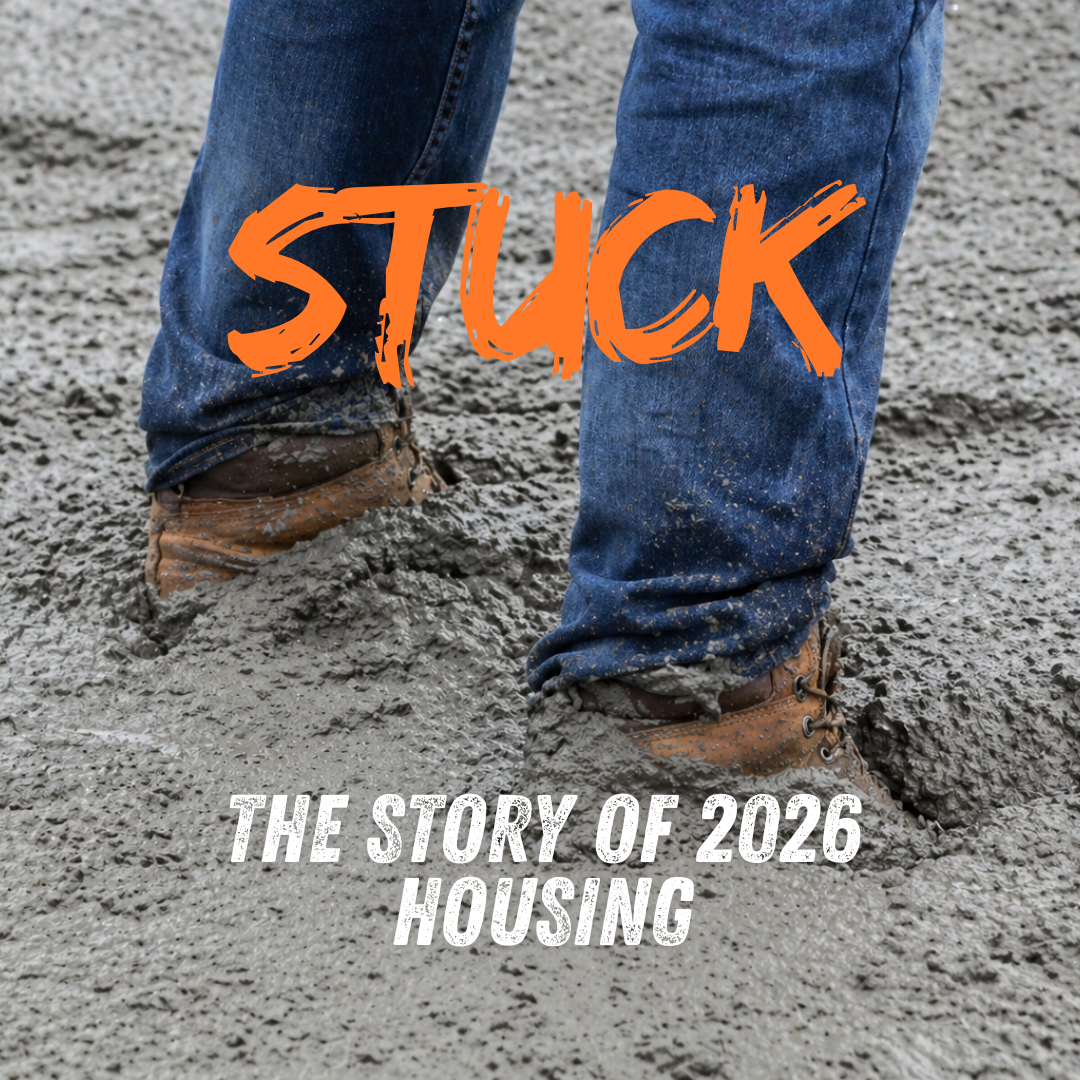
“A housing market stuck in place—but quietly transforming.”
That transformation—toward affordability-driven design, regional divergence, and slower growth—will likely define not just 2026, but the next decade of housing in the United States.
⸻
Sources
• Reuters – U.S. existing home sales and inventory data (Reuters)
• Wall Street Journal – Mortgage rates and builder cost-cutting trends (Wall Street Journal)
• Axios – Spring housing slowdown (Axios)
• New York Post – Price cuts and regional market trends (New York Post)
• Business Insider – Foreclosure and financial stress indicators (Business Insider)
• Zillow Research – Home value and sales forecasts (Zillow)
• National Association of Realtors & industry forecasts (National Association of Realtors)
• HousingWire – Affordability trends (HousingWire)
• Redfin & market forecasts (Redfin)
• Market outlook summaries (Yahoo Finance, ManageCasa) (finance.yahoo.com)
⸻
Draper DNA is what happens when building products marketing stops playing it safe. We work with manufacturers who are done checking boxes and ready to actually drive demand—from spec to sale.
No buzzwords. No busywork. Just sharp strategy, clear positioning, and marketing that pulls its weight. Our Audience DNA, Brand DNA, and Corporate DNA frameworks cut through the noise and get to what matters: growth.
If it looks good but doesn’t sell, we’re not interested.