Kitchen + Bath Trends to Prepare for in 2026: What’s Actually Changing (and What Manufacturers Should Do About It)
January 28, 2026
.
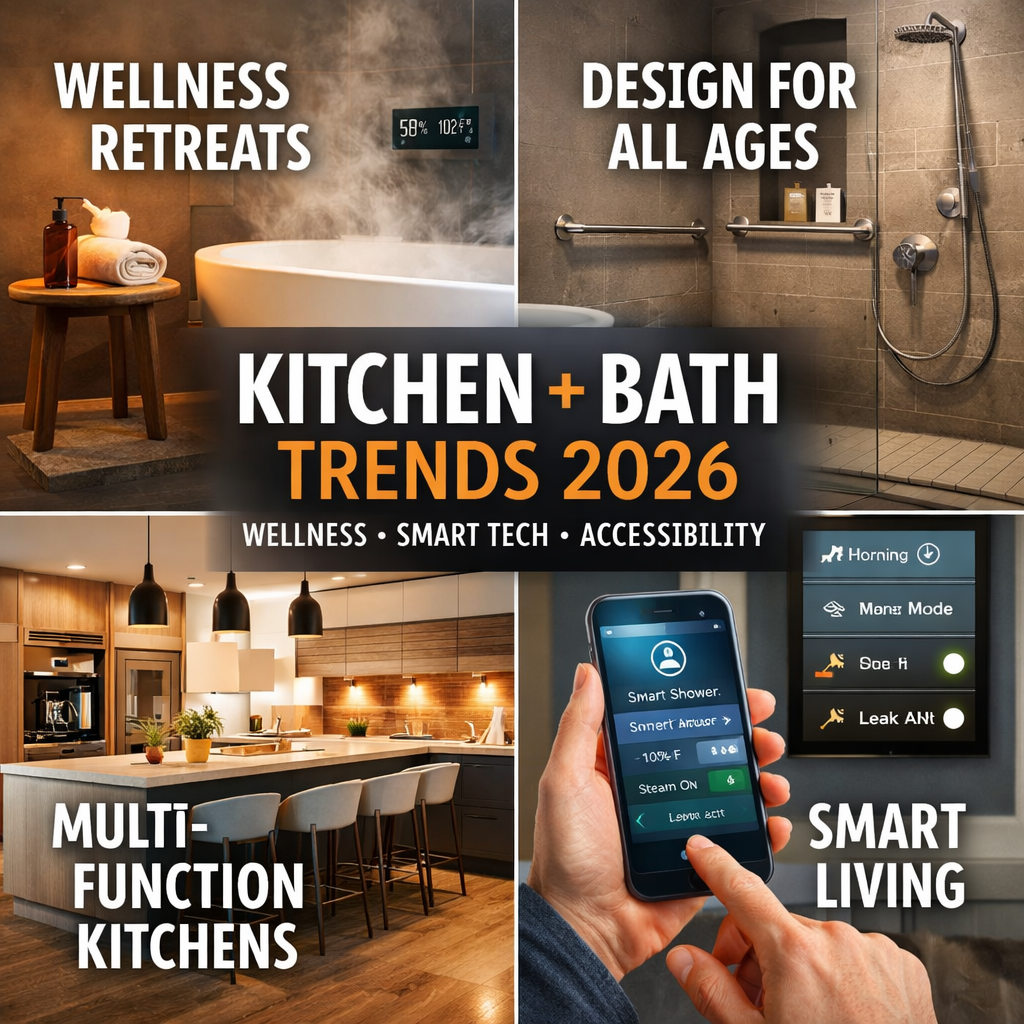
Kitchen and bath never really stop evolving. They just rotate which “must-have” features get promoted from nice-to-have to nonnegotiable. The big shift heading into 2026 is that K&B is no longer just about finishes and fixtures. It’s about health, control, flexibility, and confidence: confidence that the space will work for real life, for longer, and with fewer regrets.
NKBA’s 2026 bath research tees this up plainly: tech is reshaping the modern bath, and personal lifestyle is driving decisions more than resale math. NKBA Meanwhile, Houzz data shows homeowners are already designing bathrooms for accessibility and wellness at scale, not as niche “aging-in-place” upgrades. Houzz
Let’s break down the trends that matter in 2026, what they look like in the field, and what building products manufacturers should be doing right now to win shelf space, spec space, and mind space.
1) The Bathroom Becomes a Health Device (Not a Room)
The most important bath trend for 2026 is simple: the bathroom is being redefined as a self-care retreat plus a health-supporting environment.
Houzz found that 36% of renovated bathrooms include wellness-oriented features, led by upgraded lighting (30%), soaking tubs/spa baths (18%), and water features (13%). Houzz NKBA’s 2026 bath report also calls out “technology for wellness” and aging-in-place innovations moving mainstream. NKBA
What this looks like in real projects
-
Steam and sauna features (even “steam-lite” showers)
-
Better lighting design (circadian-friendly, glare control, makeup-accurate)
-
Quiet ventilation that actually works
-
Temperature, humidity, and air-quality awareness baked into the space
-
Materials chosen for touch, warmth, acoustics, and cleanability
Implications for manufacturers
-
Ventilation brands: stop selling “CFM” and start selling “sleep, comfort, mold prevention, and quiet.” Give designers spec-ready acoustic data and real-world performance guidance.
-
Lighting brands: bundle mirror + vanity + ambient lighting packages that support wellness claims without sounding like snake oil.
-
Surfaces brands: prioritize warm-touch, low-maintenance finishes (honed, textured, matte). Cleanability is the new luxury.
-
Plumbing brands: integrate thermostatic control, presets, and safety limits in a way that feels premium, not clinical.
2) Accessibility Isn’t a Category. It’s the Default.
Accessibility is no longer a specialty design approach. It’s quietly becoming standard practice, because homeowners are planning ahead.
Houzz reports 68% of homeowners consider special needs in bathroom projects (up year over year), and nearly half anticipate those needs five or more years out. Houzz That’s not “aging-in-place.” That’s “I don’t want to remodel twice.”
What this looks like
-
Curbless or low-curb showers
-
Non-slip flooring as a baseline expectation
-
Reinforced walls and discreet grab bar integration
-
Better lighting and safer transitions between wet/dry zones
-
Wider clearances that don’t scream “institutional”
Implications for manufacturers
-
Shower systems + doors: build product lines around barrier-free installs with clean design language and installer-friendly kits.
-
Tile + flooring: lean hard into slip resistance, but market it as confidence and comfort, not fear.
-
Hardware brands: make “universal design” look like intentional design. Hidden reinforcement systems and stylish grab options should be merchandised like premium upgrades.
3) The Kitchen Keeps Eating the House (and It’s Not Done Yet)
The kitchen isn’t just the heart of the home. In 2026 it’s basically the lungs, brain, and calendar too.
Business of Home’s NKBA-derived trend rundown points to kitchens growing larger and absorbing functions once spread across dining rooms and living rooms. Business of Home Houzz data supports the physical reality: 35% of homeowners increase the kitchen footprint, often borrowing from dining rooms (29%) and living rooms (12%). Houzz
What this looks like
-
Bigger islands that behave like desks, bars, and homework hubs
-
Secondary zones: coffee corners, beverage centers, “back kitchens,” and pantry rooms
-
Cleaner sightlines because kitchens are more visible from everywhere
Implications for manufacturers
-
Cabinetry: sell systems, not boxes. Storage is being designed as zones: prep, beverage, cleanup, pantry. Provide planning content that makes designers faster.
-
Countertops + surfaces: durability plus visual calm. Kitchens are on display constantly; surfaces must look good while living hard.
-
Appliances: the winning brands make complex features feel invisible. Smart doesn’t mean complicated.
4) Smart Features Move From “Gadget” to “Set-and-Forget”
Smart tech is finally growing up. The priority for 2026 is not flashy screens. It’s automation that reduces friction.
NKBA’s 2026 bath report highlights smart home integration expanding through intelligent showers, lighting, and energy systems, and notes younger homeowners turning to AI for design inspiration that includes smart features. NKBA On the kitchen side, homeowners are already buying appliances with specialty features at high rates: Houzz reports specialty features are selected in microwaves (65%), refrigerators (63%), and ovens (63%). Houzz
What this looks like
-
Preset shower profiles, leak detection, and smart valves
-
Lighting scenes that follow time of day
-
Appliances that prevent mistakes: lockouts, alerts, guided cooking
-
Inventory-aware refrigeration and smarter dishwashing cycles (less water, less energy, less babysitting)
Implications for manufacturers
-
Interoperability wins. If it can’t play nicely with common smart home ecosystems, it becomes a lonely gadget.
-
Education is marketing. Dealers and installers need fast training content, simple troubleshooting, and clear value props.
-
AI as a merchandising engine. If consumers are using AI for inspiration, your product imagery, naming, and spec content need to be AI-search-friendly (and accurate).
5) Statement Surfaces Shift Toward Warmth, Texture, and Coverage
Trends aren’t just about what people choose, but how they apply it. Coverage is increasing and surfaces are getting more “architectural.”
Houzz reports 67% choose full backsplash coverage up to cabinets or range hood, and 12% extend backsplashes to the ceiling (both rising). Houzz Classic tile shapes remain dominant: 68% choose rectangular backsplash tile. Houzz Translation: people want a statement, but not a circus.
What this looks like
-
Full-height slab looks, large-format tile, or extended tile fields
-
Warm neutrals, soft veining, tactile finishes
-
Less “busy pattern,” more calm with intentional detail
Implications for manufacturers
-
Tile brands: make installation easier (better trim systems, clearer specs, smarter accessory kits).
-
Slab + countertop brands: sell design intent: pairings, edge profiles, finish selection, lighting behavior. Provide spec sheets designers can drop into presentations.
-
Grout + setting materials: your moment is here. If coverage goes up, performance expectations go up with it.
6) Water Policy Whiplash Makes Performance Messaging Tricky (But Important)
Water efficiency standards and definitions can change, and that affects product development and how brands talk about performance. DOE’s overview of showerhead standards traces back to federal water use standards under EPCA. The Department of Energy’s Energy.gov In 2025, the Federal Register documented a move to repeal the DOE regulatory definition of “showerhead.” Federal Register
Whether a brand leans into water savings, pressure performance, or both, the message needs to be precise and grounded in what codes and consumers actually care about: comfort, safety, reliability, and cost to operate.
Implications for manufacturers
-
Build claims that survive scrutiny: testing standards, certifications, and transparent performance metrics.
-
Equip dealer partners with simple talking points that don’t wander into legal gray zones.
-
Make “great experience at compliant flow” part of the product story.
7) The Real 2026 Shift: Buying Decisions Are Content-Driven
Here’s the thing: a lot of K&B decisions now happen before anyone walks into a showroom. People arrive with saved images, influencer clips, and AI-generated mood boards. NKBA explicitly notes younger homeowners are turning to AI for inspiration that blends smart features, sustainability, and style. NKBA
So the product that wins in 2026 is often the product that:
-
shows up in discovery
-
looks credible fast
-
is easy to specify, buy, and install
-
comes with proof and guidance
That’s not a design trend. That’s a go-to-market reality.
What Building Products Manufacturers Should Do Now
If you make cabinets, countertops, plumbing, lighting, ventilation, tile, hardware, appliances, or bath accessories, 2026 success isn’t about chasing every trend. It’s about aligning product + message + channel.
Three practical moves
-
Package your products around “systems,” not SKUs. Wellness bath bundles. Accessible shower kits. Beverage-zone cabinetry packages.
-
Upgrade your spec + training content. Designers and installers don’t need more inspiration. They need fewer surprises.
-
Own a point of view. “Warm minimalism,” “quiet luxury,” “healthy home,” “design-forward accessibility.” Pick your lane and defend it with evidence.
Where Draper DNA Fits In
Trends don’t pay the bills. Execution does.
Draper DNA helps building products manufacturers translate these 2026 kitchen and bath realities into:
-
positioning that doesn’t sound like everyone else
-
content that gets found (by humans and algorithms)
-
campaigns that move product through showrooms, dealers, and pro channels
-
and sales enablement that makes reps and partners more effective immediately
If your 2026 plan is “post more on Instagram and hope,” we can do better. Draper DNA is the partner that turns market signals into a clear message, a clean launch plan, and a pipeline that doesn’t rely on luck.
About Draper DNA
Draper DNA is a marketing consultancy built specifically for building products manufacturers navigating complex categories like kitchen and bath. We work at the intersection of design, performance, and purchasing behavior—helping brands translate market trends into clear positioning, compelling storytelling, and measurable growth.
From cabinetry, surfaces, plumbing, lighting, and ventilation to appliances and architectural hardware, Draper DNA understands how products move from inspiration to specification to installation. Our work helps manufacturers align product strategy, content, and channel execution so they show up credibly with designers, builders, dealers, and homeowners alike.
As kitchens and baths evolve into wellness-focused, technology-enabled, and longevity-driven spaces, Draper DNA partners with brands to cut through the noise—turning trends into action, features into value, and innovation into preference.
To learn more, visit draperdna.com or connect with us on LinkedIn.